Lumy Red Light Therapy Devices review: honest experiment
Competently built red light panels from an FDA-registered maker, sold into a category whose scientific story is still being written. Reasonable hardware, reasonable company — the wildcard is red light therapy itself, where research is active, results vary by person, and patience is part of the purchase.
What we like
- FDA-registered manufacturer — a real bar in a category full of anonymous imports
- Panel build and usability are solid: mounting options, timers, sensible controls
- The at-home format makes consistent use plausible, which any light protocol depends on
- Clear usage guidance rather than mystical promises
Flaws but not dealbreakers
- The evidence base for red light therapy is still forming — outcomes genuinely vary
- Benefits, where users report them, arrive gradually; this is a consistency product
- Real money for a device whose payoff you may or may not personally experience
- Registered is not the same as endorsed — FDA registration describes the maker, not proof of results
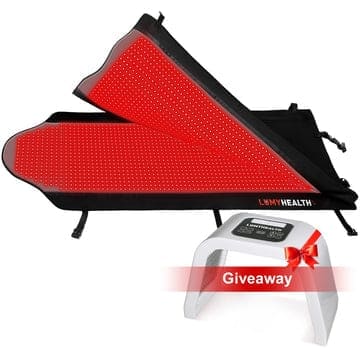
Red light therapy sits in the strangest spot in home wellness: too much published research to dismiss as pure fad, not enough settled consensus to buy with confidence. Panels of red and near-infrared LEDs, used regularly, are being studied for effects on skin and muscle comfort, and the fair summary of that literature is 'actively under investigation, with mixed and individual results.' Lumy's pitch is not that they've resolved the science. It's that if you're going to explore the category at all, you should do it with equipment from an accountable, FDA-registered maker rather than a nameless imported panel — and that much is hard to argue with.
On the hardware terms, Lumy holds up well. The panels are built like products rather than projects: sturdy housings, usable mounting and stand options, timers that make routine use frictionless, and documentation that talks about session consistency instead of miracles. That last point matters practically, because whatever red light does for a given person, every credible protocol assumes regular use over weeks — a device annoying enough to abandon can't work even in principle. FDA registration, for its part, deserves an honest gloss: it means the manufacturer is registered with the agency as a device maker, which signals accountability. It is not an endorsement of effectiveness, and buyers should read it as 'legitimate company,' not 'proven therapy.'
The category context lives in our Heat, Light and Hype: What to Buy for Pleasure, Test with Caution, or Skip.
The expectations paragraph is the whole review, really. Users who report benefits describe them arriving gradually and varying in size; others report little they can point to. Nobody should buy a panel to treat a medical condition — skin conditions, pain, or anything else that matters belongs with a doctor first, and if chronic pain is the motivation, a physician or physical therapist should be the first appointment, with the panel at most a topic to raise there. The right buyer profile is narrow: curious, comfortable spending real money on a maybe, and disciplined enough to actually use the thing long enough to find out.
If you are shopping the category rather than the brand, the spec that separates serious panels from decorative ones is irradiance — how much light actually reaches you at a stated distance — and the honest observation is that comparing it across brands is close to impossible. Manufacturers measure at different distances, with different meters, and rarely publish the method. Treat any number quoted without a distance attached as marketing. The more useful proxies are unglamorous: panel size relative to the body area you care about, whether the stand or mount holds it steady at a consistent distance, and whether the fans are quiet enough that you'll sit through a session rather than cut it short.
Two practical points nobody mentions until after purchase. First, eye comfort: the light is bright enough to be genuinely unpleasant to look at, and most people end up wanting the goggles that ship with these panels or an equivalent — plan for that rather than squinting through sessions. Second, where it will live. A panel is a large flat object that needs a clear wall or a stand's footprint and an outlet, and the households that stop using them are usually the ones who had to move the thing in and out of a cupboard each time. Consistency is the whole protocol; friction is what kills it.
It is also worth being clear-eyed about how this category markets itself, because the surrounding noise is worse than the product. Panels are routinely sold with before-and-after photographs shot under different lighting, with athlete endorsements that describe feelings rather than outcomes, and with citations to studies whose actual subjects and doses bear little relation to a person sitting in front of a home panel. Lumy is notably more restrained than the category average, which is part of why it scores as well as it does — but the restraint is relative, and the reasonable posture is still scepticism.
The score reflects that split verdict: good marks for the company and the build, a hard discount for the category's unsettled science and the very real possibility that your personal results are subtle to nonexistent. If you go in understanding you're funding your own small experiment — with decent equipment and no medical stakes riding on it — Lumy is a reasonable way to run it. If you want a guarantee that the money buys a result, this whole category is the wrong place to look, and no brand inside it can honestly give you one.
Key specs
- Type
- At-home red and near-infrared light panels
- Credential
- FDA-registered manufacturer
- Best for
- Curious, consistent users with calibrated expectations — not medical treatment