Aletha Health Hip Hook review: targeted bet
A single-purpose tool that reaches a muscle group foam rollers can't — the deep hip flexors — with an intensity that sorts buyers instantly into devotees and returners. The design logic is sound and the desk-worker problem it targets is real; the science on self-release tools is still settling, and this is a comfort-and-mobility aid, not a treatment.
What we like
- Targets the deep hip flexor region that rollers and balls genuinely can't reach well
- Designed around a specific, common problem — the chair-shaped modern hip
- Solidly built for what is essentially a shaped leverage tool
- Self-paced: you control the pressure, unlike a therapist's elbow
Flaws but not dealbreakers
- The sensation is intense, and a meaningful share of buyers never get past it
- Premium price for a single-exercise, single-body-region tool
- Evidence on soft-tissue self-release is still evolving — expect relief that varies person to person
- Technique matters; used carelessly it's just expensive discomfort
- Persistent hip or back pain belongs with a clinician first, not a gadget
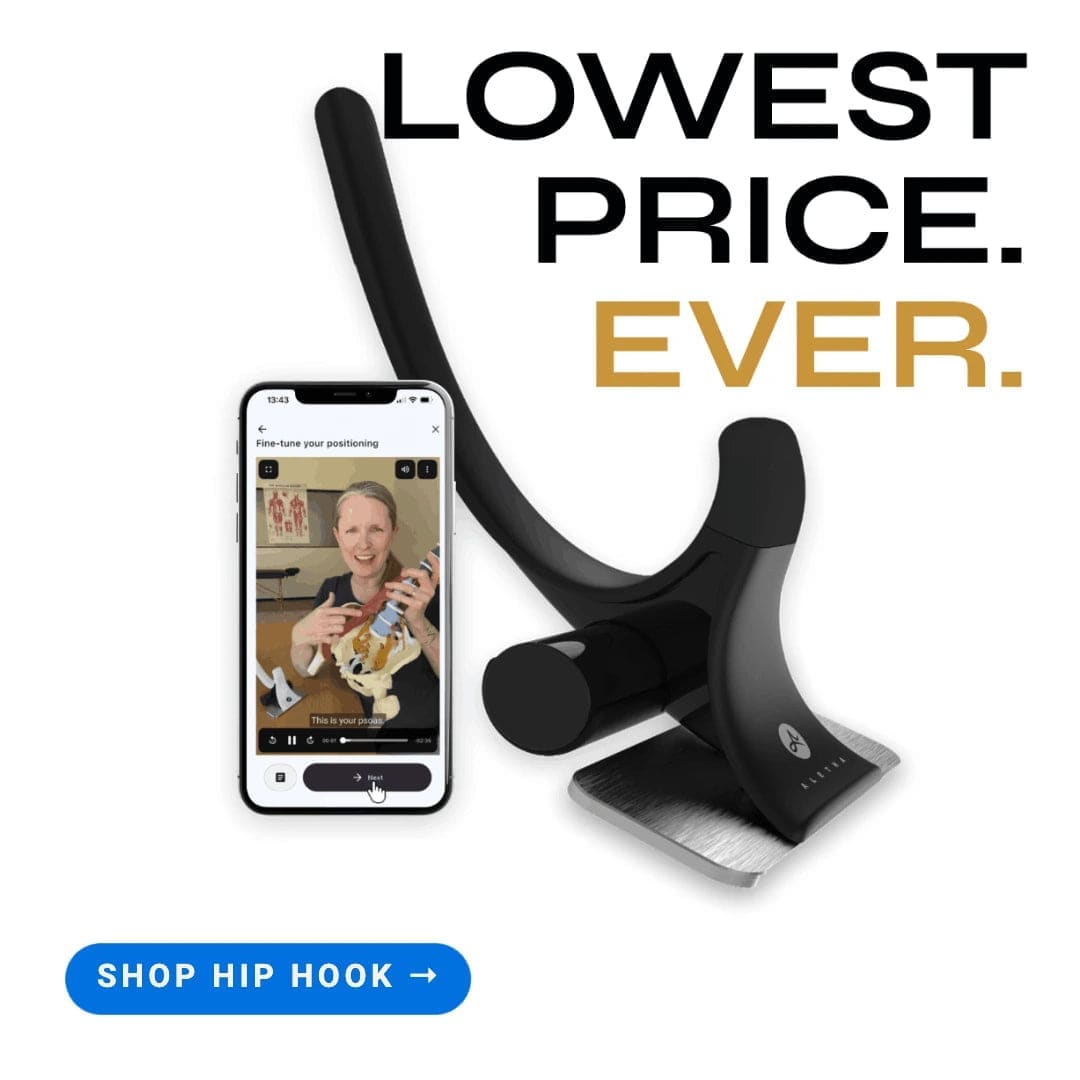
Chairs won the twentieth century, and our hip flexors are the treaty terms. The muscles that fold you into a sitting position spend all day shortened, and a whole industry of rollers, balls and stretching apps exists to argue with that reality. Aletha Health's Hip Hook enters that argument with an unusually specific claim: the deepest hip flexors sit behind other tissue where a foam roller's broad pressure can't usefully reach, and a purpose-shaped tool that applies angled pressure can. Mechanically, the logic holds — this is the region massage therapists dig into with careful elbows, and the Hook is essentially that elbow, molded and self-operated.
The first thing every honest account of this product mentions is the sensation, so let's not bury it: pressure into the deep hip flexors is intense in a way first-timers rarely anticipate. The company frames this as the point — that's the tissue you couldn't reach — and experienced users describe acclimating over sessions. But the intensity is also the product's biggest filter. Some buyers adapt and become evangelists; others try it twice and it joins the drawer of ambitious purchases. Which camp you'll land in is nearly impossible to predict from a product page.
We ran the same rubric across the category in Recovery Gear, Ranked by What's Actually Proven if you want the comparison.
Now the part this category too often skips. The science of self-administered soft-tissue release — what it physically does, how long effects last, why responses differ — is still an active conversation among researchers and clinicians, and results genuinely vary from person to person. That doesn't make the tool useless; plenty of users report feeling looser and moving more comfortably, and those reports count for what subjective relief counts for. It does mean nobody should read this device as a treatment for anything. If hip or lower-back pain is persistent, worsening or affecting your life, the correct purchase is an appointment with a doctor or physical therapist, and the Hook is at most a question to ask them about.
Technique and expectations do a lot of work here. The tool rewards slow, patient use — easing on gradually, breathing, short sessions — and punishes the crank-it-and-suffer approach with soreness that teaches the wrong lesson. It's also, by design, a one-trick object: this is a premium purchase that addresses one region with one method, and buyers should price that honestly against a foam roller's crude versatility or a few sessions with a professional who can also tell you what's actually going on.
Who it fits: the desk-bound or training-heavy user who already knows their hips are the tight spot, has ruled out anything clinical, has tried the cheap tools, and wants targeted pressure on their own schedule. Who it doesn't: anyone hoping a gadget will resolve pain a professional hasn't seen yet, and anyone whose relationship with intense sensation is adversarial.
The score lands mid-high on purpose: real design intelligence and a real user base who swear by it, held back by single-purpose pricing, a punishing learning curve, and a scientific picture that's still developing. A useful tool in the right hands — as long as those hands hold reasonable expectations too.
Key specs
- Type
- Hip flexor release tool (psoas region)
- Approach
- Body-weight pressure and leverage, self-administered
- Best for
- Desk workers and athletes with chronically tight hips — after ruling out medical causes